
LLMSS Conference 2026
Large Language Models & the Social Sciences
October 14–16, 2026 · City University of Hong Kong
About the Conference
The inaugural Large Language Models and the Social Sciences Conference (LLMSS 2026) is organised by Talking to Machines — an international research initiative leveraging artificial intelligence in experiment design and implementation.
The conference brings together AI researchers, industry practitioners, government representatives, and social scientists to examine how large language models are reshaping research methodologies, data analysis, and theoretical frameworks across the social sciences.
Organising Institutions:
- City University of Hong Kong — Computational Social Sciences Lab
- University of Oxford — Nuffield College Talking to Machines Initiative
An Open, International Conference
Large Language Models and the Social Sciences (LLMSS) Hong Kong Oct 14–16, 2026, is an open, international conference. We welcome submissions & attendance from researchers worldwide — regardless of institutional affiliation, nationality, or geopolitical context. Science advances through exchange!
Keynote Speakers

Issa Dahabreh
Associate Professor of Epidemiology and Biostatistics
Harvard T.H. Chan School of Public Health
Issa Dahabreh, MD ScD, is Associate Professor of Epidemiology and Biostatistics at the Harvard T.H. Chan School of Public Health, and Section Head for Epidemiology and Data Science at the Richard A. and Susan F. Smith Center for Outcomes Research. His research develops methods for causal inference, evidence synthesis, and the use of trial and external data to improve the design and analysis of studies informing clinical and public health decisions.
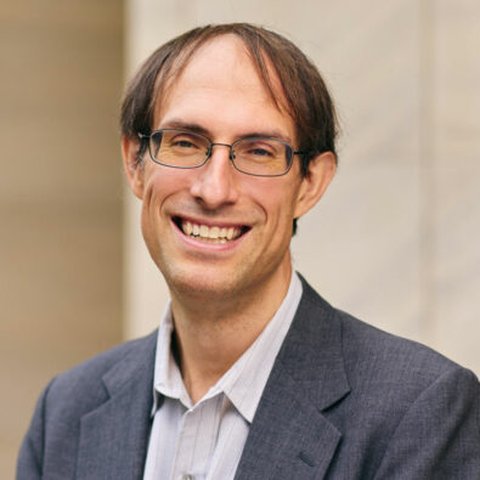
Scott A. Hale
Professor of Social Data Science & Director
Oxford Internet Institute, University of Oxford
Prof. Scott A. Hale is Professor of Social Data Science and Director of the Oxford Internet Institute, a multidisciplinary department at the University of Oxford focused on understanding the effects of new technologies on society. He is also Director of Research at Meedan, a technology nonprofit building public interest AI tools. At Oxford, he leads the Equitable Access to Quality Information Lab (eaqilab), which focuses on developing and applying new machine learning approaches to understand and improve how people discover, evaluate, and make use of online information in their daily lives. He is particularly interested in LLM alignment and multilingual Natural Language Processing applications as well as putting research into practice with community and media organizations.

Meng Tianguang
Tenured Professor of Political Science
School of Social Sciences, Tsinghua University
Meng Tianguang is a Tenured Professor in the Department of Political Science and Associate Dean of the School of Social Sciences at Tsinghua University. His research spans Chinese politics, the politics of information, digital governance, and computational social science, addressing topics such as state responsiveness, algorithmic governance, and political participation in digital environments. He earned his Ph.D. in Political Science from Peking University (2013) and has been a postdoctoral fellow at UC San Diego and a visiting scholar at Harvard University. He was named a Changjiang Distinguished Professor in 2024 and has been recognised by the American Political Science Association.

Zhongyu Wei
Professor, School of Data Science
Fudan University
Zhongyu Wei is a professor in the School of Data Science at Fudan University, Director of the Data Intelligence and Social Computing (Fudan DISC) Lab, and a full-time mentor at the Shanghai Innovation Institute. He earned his Ph.D. from the Chinese University of Hong Kong before joining the University of Texas at Dallas as a postdoctoral researcher. His research focuses on generative agents and social simulation. He has published over 100 papers, with more than 11,000 citations according to Google Scholar, and proposed the social world model SocioVerse and the social media simulator HiSim. He has served multiple times as a Senior Area Chair for leading natural language processing conferences, including ACL, EMNLP, and NAACL. His honors include recognition on the AI100 Young Pioneers list by MIT Technology Review China and DeepTech, and selection for the Youth Project of the Shanghai Eastern Talent Plan. He also leads a National First-Class Undergraduate Course recognized by China's Ministry of Education.
Plenary Speakers
Jian Hua Jonathan Zhu
Chair Professor of Computational Social Science
City University of Hong Kong
Prof. Jian Hua Jonathan Zhu is Chair Professor of Computational Social Science at City University of Hong Kong and Director of the Centre for Communication Research (CCR). He is a Chair Professor in the Department of Media and Communication and in the Department of Data Science.
King-wa Fu
Professor
Journalism and Media Studies Centre (JMSC), The University of Hong Kong
King-wa Fu is a Professor at the Journalism and Media Studies Centre (JMSC), The University of Hong Kong. His research interests include China's information governance, media and political participation, computational social sciences, health and the media, and the younger generation's media use. He was a visiting Associate Professor at the MIT Media Lab and a Fulbright-RGC Hong Kong Senior Research Scholar in 2016–2017, a China-US Scholar in 2021–2022 at Boston University, and a Richard von Weizsäcker Fellow at the Robert Bosch Stiftung since 2023.
Core Research Themes
Data Generation & Collection
- Language models in experimentation (AI agents as survey respondents)
- Adaptive experiment design through language model guidance
- Synthetic data generation and augmentation
- Dataset curation with automated labelling
LLM Applications in Social Science
- Text analysis and classification methods
- Causal inference from textual sources
- Analysis of interviews and open-ended responses
- Domain-specific applications in policy, economics, and law
LLM Development & Adaptation
- Model interpretability and explainability
- Fine-tuning and domain-specific customisation
- Prompt engineering strategies
- Evaluation and benchmarking protocols
Tools, Platforms & Infrastructure
- Research software libraries and frameworks
- LLM-driven research platforms
- Scalability and deployment solutions
- Reproducibility best practices
Ethics, Policy & Societal Impact
- Ethical challenges in research applications
- Fairness and bias mitigation
- Policy and governance implications
- Robustness and transparency standards
Multimodal & Emerging Methods
- Multimodal architecture innovations
- Cross-modal analysis (text, audio, video)
- Generative agents in social simulation
- Novel LLM applications in political science
Call for Pre-Conference Workshops
Proposal Deadline
31 August 2026
LLMSS 2026 is assembling a hands-on, code-along workshop programme on applied AI/LLM methods for the social sciences, held Tuesday 13 October — the day before the main conference. The confirmed line-up already spans AI public opinion polling, digital twins, the “Silicon Audience,” and prediction-powered inference (PPI++). We are inviting proposals for additional half-day workshops.
We’re looking for: hands-on, code-along sessions (not lecture-only) on applied methods at the intersection of AI/LLMs and social science research — text-as-data, causal inference and RCTs, fine-tuning and domain adaptation, generative agents and multi-agent simulation, or other methodological frontiers relevant to the conference themes.
To propose a workshop, send the following to Melanie Sawers (melanie.sawers@nuffield.ox.ac.uk) by 31 August 2026:
- Workshop title and a short description
- Target audience and any prerequisites
- Format and a rough session outline (e.g. framing → worked example → hands-on exercise → discussion)
- Hands-on component: tools, packages, or datasets involved
- Organiser name(s) and short bio(s)
Workshops are capped at 30–50 participants to keep the hands-on experience genuine. Accepted workshop organisers receive a complimentary conference registration; the conference provides the room and A/V, and organisers are responsible for their own materials (we recommend cloud-based notebooks — Google Colab or Hugging Face Spaces — to avoid setup issues on the day).
Places in the pre-conference workshops are otherwise allocated through conference registration.
Registration
Registration is now open
To confirm your participation, please register by 30 September 2026.
Register via COMSPresenting Authors
Presenting authors must be registered by 31 August 2026 for their paper to appear in the programme.
Early Registration
€550
Until 15 September 2026
Regular Registration
€650
From 16 September 2026
Registration Deadline
30 September 2026
Accepted workshop participants receive dinner on the opening evening and lunch during the event. Travel and accommodation are not provided.
Places in the pre-conference workshops on Tuesday 13 October are allocated through conference registration.
Cancellation Policy
- Before 30 September: Full refund minus €50 processing fee
- After 30 September or no-show: No refund
Conference Format
- Invited Keynote Talks: Talks by leading experts from academia and industry at the forefront of LLM research and applications.
- Research Paper and Poster Sessions: Presentations of accepted papers and poster displays for work-in-progress, with ample time for questions and discussion.
- Interactive Workshop Presentations: Seminar-style sessions where researchers can demo tools, share data, or conduct mini-tutorials on specialised methods.
- Methodological Demonstrations: Live demonstrations of new software, libraries, or experimental techniques relevant to LLMs and social science.
- Structured Feedback & Discussion: Dedicated discussant feedback for each presented paper and open-floor discussions to provide in-depth, constructive critique and foster collaboration.
Pre-Conference Workshops
Public Opinion · Digital Twins · The Silicon Audience · Valid Inference
Tuesday 13 October 2026 · City University of Hong Kong
A full-day, hands-on workshop programme on applied AI/LLM methods for the social sciences. The core track introduces the Talking to Machines digital twin approach — from measuring public opinion, to generalising belief measurement, to designing strategy with synthetic panels — alongside additional sessions on validly incorporating LLM predictions into research.
Morning
09:00–12:30
AIPOP
Afternoon I
13:30–15:30
Talking to Digital Twins
Afternoon II
15:45–17:45
The Silicon Audience
Morning
09:00–12:30
Predicting Human Behavior with LLMs
Workshop Programme
Workshop 1
AIPOP — Artificially Intelligent Public Opinion Polling
09:00–12:30·Leads: Raymond Duch, Laurenz Günther & Matias Fuentes Becerra
As traditional surveys grow more expensive and response rates collapse, large language models offer a provocative alternative: inferring public opinion from the digital traces people already leave behind. This hands-on workshop walks participants through PoSSUM — our Protocol for Surveying Social Media Users with Multimodal LLMs — the AI polling method whose state-by-state forecasts of the 2024 US presidential election tracked, and at times outperformed, the leading poll aggregators. We move through the full pipeline: designing the digital interview, building a “silicon” sample of social-media users, and producing bias-corrected estimates with multilevel regression and post-stratification (MrP) in R, validated against ground-truth election results. A featured sub-theme is our Swiss “Silicon Politicians” study, which predicts how individual politicians and citizens vote in referendums from their social-media traces alone — and showcases the app we built around it. Throughout, we keep the harder question in view, drawing on the recent APSA report Public Opinion in the Age of AI: when does simulating respondents enrich measurement, and when does it risk manufacturing the opinion it claims to observe?
Aimed at pollsters, political scientists, and survey methodologists comfortable with R; no machine-learning background required.
| Time | Session |
|---|---|
| 09:00–09:30 | Why AI polling? |
| 09:30–10:10 | PoSSUM and the 2024 US election case |
| 10:10–10:25 | Coffee break |
| 10:25–11:30 | Hands-on: Build a silicon sample and run MrP |
| 11:30–12:05 | Swiss 'Silicon Politicians' demo |
| 12:05–12:30 | Discussion & Q&A |
12:30–13:30 · Lunch break
Workshop 2
Talking to Digital Twins — The Wisdom of Digital Twins
13:30–15:30·Leads: Raymond Duch & Matias Fuentes Becerra
The afternoon extends the morning’s method beyond elections. The same architecture — unobtrusively harvesting someone’s public posts, repeatedly interviewing an LLM “digital twin” built from them, and applying panel econometrics to the result — turns scattered, self-selected commentary into a balanced, forward-looking panel of on-demand forecasters. We work through three applications. In financial markets, we build digital twins of “finfluencers” and interview them daily, recovering their stock-level beliefs even on days they post nothing, and show that these signals predict the cross-section of S&P 500 returns without look-ahead bias (drawing on our Talking to Digital Twins study, Bowles et al., 2026). We then turn to forecasting and prediction-market applications, and to a measurement problem the method is unusually suited to: eliciting views on sensitive topics people are reluctant to volunteer — treating silence itself as a belief state. Participants build a twin, run a repeated-interview protocol, assemble the panel, and evaluate a simple forecast.
Aimed at financial economists, quantitative and survey researchers, and data scientists comfortable with Python or R; the morning session is helpful but not required.
| Time | Session |
|---|---|
| 13:30–13:55 | From polls to markets |
| 13:55–14:30 | Finfluencer twins and S&P 500 signals |
| 14:30–15:15 | Hands-on: Build a digital twin |
| 15:15–15:30 | Backtesting and prediction markets |
15:30–15:45 · Short break
Workshop 3
The Silicon Audience: Designing Persuasive Messages, from Campaigns to Courtrooms
15:45–17:45·Leads: Laurenz Günther with Raymond Duch
This capstone session turns the digital twin from a measurement instrument into a design tool. The same architecture that reads opinion can be run as a closed loop: propose a strategy, have a panel of LLM twins evaluate it, and search for the version that resonates best with the target audience. We introduce the engine on familiar ground — generating and optimising political-party platforms against a twin panel, using the same party-policy optimisation harness demoed in the morning session — then re-point that identical harness at the courtroom. Participants build twins of jurors and judges, stage a synthetic mock trial, and vary the argument — opening framing, evidence order, narrative emphasis — reading the twins’ verdict probabilities as the case is re-argued. Throughout we keep validity and ethics in view: how to validate synthetic jurors against the experimental mock-trial literature, how the contamination of well-known cases threatens prediction, and why these are tools for stress-testing arguments before they are made, never for replacing adjudication.
Pitched to engage the legal community — law schools, litigation and legal-technology firms, and judiciary-adjacent researchers — alongside computational social scientists. Aimed at intermediate participants comfortable running Python notebooks; no legal or machine-learning background required.
| Time | Session |
|---|---|
| 15:45–16:10 | Closed-loop optimisation |
| 16:10–16:50 | Political platform optimisation |
| 16:50–17:30 | Juror and judge twins |
| 17:30–17:45 | Ethics, validation & Q&A |
Workshop 4
Predicting Human Behavior with LLMs — A Practical Toolkit for Valid Inference
09:00–12:30·Leads: David Broska
Researchers in academia and industry increasingly propose using LLM predictions of human behavior to pilot, augment, or even replace human data collection. When do these predictions support valid inferences, and when do they mislead? This workshop introduces a practical toolkit for answering that question and for using them in scientifically defensible ways. Drawing on recent frameworks for using and validating LLM predictions as behavioral evidence (Broska et al. 2025; Hullman et al. 2026), participants will learn to assess when predicted responses can be trusted, recognise common failure modes, and combine human and synthetic samples for greater precision without introducing bias. Used carefully, predictions do not replace human samples but help researchers design more informative studies.
Attendees will leave with the concepts and hands-on experience needed to decide whether and how to incorporate LLM predictions into their own research.
Practical Details
- Code-along workshops with notebooks and datasets provided.
- Laptop and web browser required.
- Suitable for PhD students and researchers across the social and data sciences.
- Places allocated through conference registration.
Venue & Travel
City University of Hong Kong (CityU)
Tat Chee Avenue, Kowloon Tong, Hong Kong
The campus features modern, fully accessible facilities with direct MTR access via Kowloon Tong Station. It is adjacent to the Festival Walk shopping mall and is 30–40 minutes from Hong Kong International Airport.
October temperatures in Hong Kong typically range from 26–29°C (79–84°F), making it an ideal time for sightseeing. Nearby attractions include Victoria Peak, Kowloon Walled City Park, Mong Kok Markets, and the Tsim Sha Tsui Promenade.

Accommodation
Participants are responsible for arranging their own accommodation in Hong Kong. Early booking is recommended as October is peak season. The hotels below are offered as suggestions for convenience and are not official conference hotels — please check rates and availability directly with each hotel.
| Hotel | Area | Why consider it | Getting to CityU |
|---|---|---|---|
| Royal Plaza Hotel★ Recommended | Mong Kok East | Comfortable hotel connected to the MOKO shopping centre, with excellent transport connections. | Convenient access from Mong Kok East; straightforward journey to CityU. |
| Metropark Hotel Mongkok | Prince Edward / Mong Kok | Good mid-range option with plenty of restaurants, shops and transport nearby. | Very close to Prince Edward MTR and around a 10-minute walk from Mong Kok East. |
| The Cityview | Yau Ma Tei | Well-located mid-range option, particularly convenient for delegates wanting easy access to central Kowloon. | Approximately one minute's walk from Yau Ma Tei MTR, with easy onward travel to CityU. |
| E Hotel Hong Kong | Sham Shui Po | Smaller hotel that may suit delegates looking for a more affordable option. | Close to the MTR, providing convenient access to CityU. |
About Talking to Machines
Talking to Machines is a project leveraging artificial intelligence in experiment design and implementation. It represents an international collaboration of academics and industry researchers across diverse institutions worldwide. Research findings have been published in leading peer-reviewed social science journals.
The project is directed by Sonja Vogt (HEC University of Lausanne) and Ray Duch (Nuffield College, University of Oxford), with primary funding from the Swiss National Science Foundation.
The main objective is to advance social science research through innovations that harness recent breakthroughs in AI.
Our Focus:
- Incorporating synthetic personas into experimental design
- Developing LLM models for crafting video intervention treatments
- Creating AI-enhanced tools reflecting cultural diversity in Global South research contexts
- Characterising treatment effect heterogeneity across populations
- Developing open-source platforms for research accessibility
Research Themes:
- AI–human subject interactions
- Digital twin technologies
- LLM-guided RCT data collection
- Adaptive experiments
- AI public opinion polling
- Video treatment design
Contact
For submission system issues, logistics questions, or conference scope enquiries, please contact:
Melanie Sawers — Conference Coordinator
melanie.sawers@nuffield.ox.ac.uk